
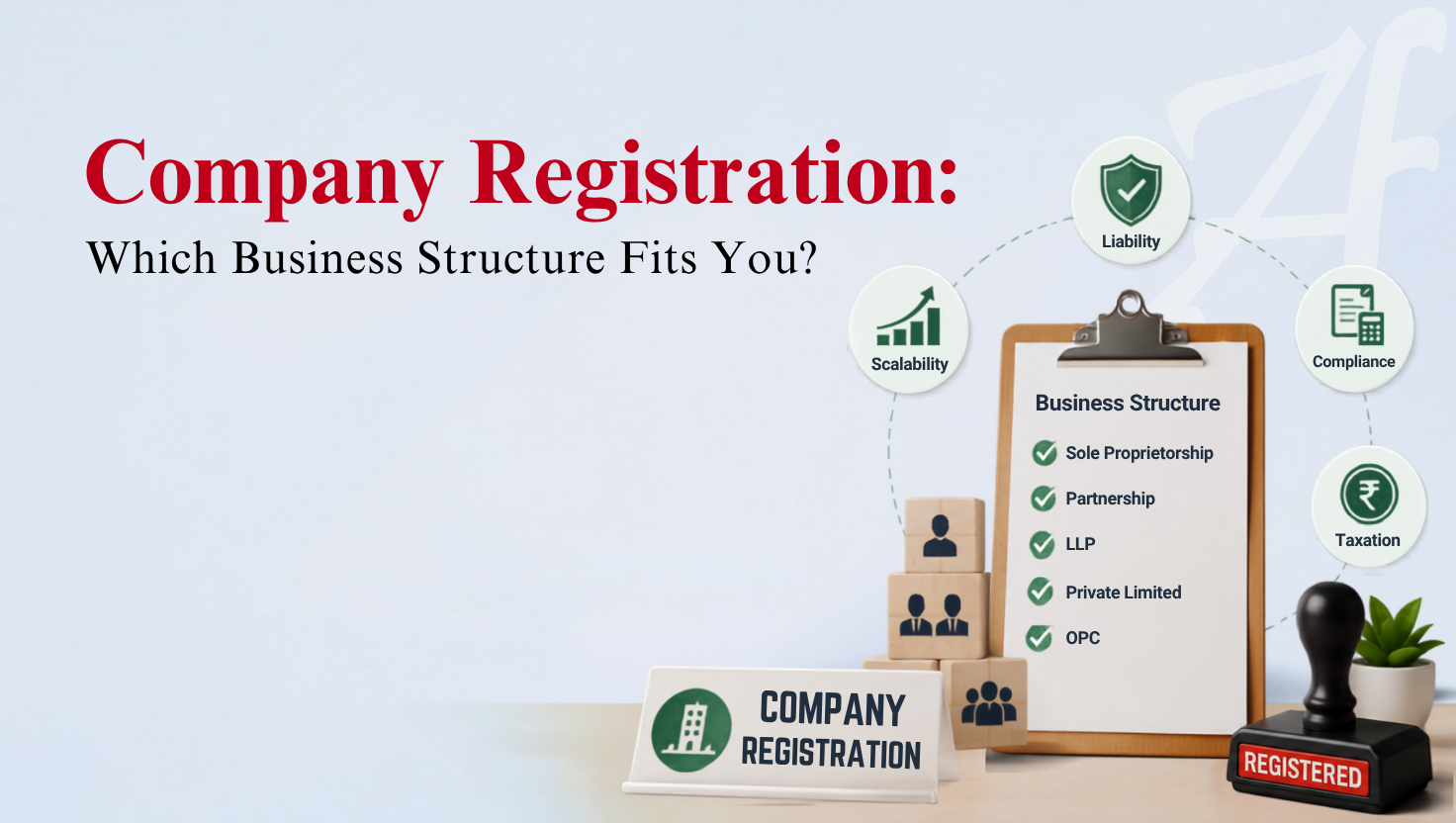
Odisha's business landscape has grown fast, from Bhubaneswar's startup ecosystem to MSMEs across the state's industrial corridors. But before any business can operate legally, it needs the right registration, and in India, "registration" isn't a single step. It's a set of choices: which entity structure, which tax registrations, and which follow-up filings apply to you.
Start With the Entity Structure, Not the Paperwork
The biggest mistake founders make is registering under whichever structure sounds familiar instead of the one that fits their business. Here's how the common options actually differ.
Private Limited Company
A Pvt Ltd company is the standard choice for businesses planning to raise external funding, bring on investors, or scale with a formal ownership structure. It offers limited liability and is recognized by banks and investors as a credible, scalable entity, but it comes with more ongoing compliance than simpler structures.
LLP (Limited Liability Partnership)
An LLP suits professionals and partners who want limited liability without the compliance load of a Pvt Ltd company. It's a common choice for consultancies, service firms, and small partnerships that don't plan to raise institutional funding.
Partnership Firm
A traditional partnership firm is the simplest structure to set up, but partners carry unlimited personal liability. It works for small, low-risk businesses run by trusted partners, but it's rarely the right choice once the business starts scaling or taking on financial risk.
Beyond Entity Structure: The Registrations Businesses Often Miss
MSME/Udyam Registration
Any small or medium business, regardless of entity type, can register under Udyam. It's not mandatory, but it unlocks real advantages: easier access to loans, interest subsidies, protection against delayed payments from buyers, and eligibility for government MSME schemes. Many businesses in Odisha skip this simply because they don't know it exists.
GST Registration
GST registration becomes mandatory once your turnover crosses the prescribed threshold, or immediately if you're doing inter-state supply or selling through e-commerce platforms. Registering before you're required to can also help if you're dealing with GST-registered buyers who need input tax credit.
PAN and TAN
A PAN is required for the business itself to file taxes, and a TAN is required if the business deducts tax at source (TDS), on salaries, contractor payments, or rent, for instance. Both are foundational and usually obtained right after incorporation, but they're easy to overlook until a payment or filing gets stuck without them.
Why the Order Matters
A common pattern in Odisha's small business sector: entities get incorporated first, and MSME, GST, or TAN registrations get handled months later, once a bank or client asks for them. Each of these registrations exists to solve a real problem (funding access, tax compliance, TDS deduction), and handling them together from the start avoids scrambling later.
A Simple Way to Think About It
- Raising funds or scaling with investors? Private Limited Company
- Professional services, limited liability, simpler compliance? LLP
- Small, trusted partnership, low risk? Partnership Firm
- Any of the above, and want funding/scheme access? Add MSME/Udyam
- Crossing the turnover threshold or selling inter-state? GST is mandatory
- Deducting TDS or filing business taxes? You'll need both PAN and TAN
Frequently Asked Questions
Q1. Which is better for a startup in Odisha, Pvt Ltd or LLP?
A: If you plan to raise funding or bring in investors, Private Limited is the standard choice. If you want limited liability with simpler compliance and no funding plans, LLP is usually a better fit.
Q2. Is MSME/Udyam registration mandatory?
A: No, it's optional, but it offers real benefits like easier loan access and protection against delayed payments, so most eligible businesses register anyway.
Q3. When does GST registration become mandatory?
A: Once your turnover crosses the prescribed threshold for your category, or immediately if you're supplying inter-state or selling through e-commerce platforms.
Q4. Do I need both PAN and TAN for my business?
A: You'll always need a PAN. You'll need a TAN too if your business deducts TDS, for example on employee salaries or contractor payments.
Q5. Can I change my business structure later?
A: Yes, but converting from one structure to another (say, Partnership to Pvt Ltd) involves its own filing process, so it's better to choose correctly at the start where possible.
Q6. How long does company registration take in Odisha?
A: With complete documentation, incorporation typically takes about 7–10 working days, regardless of location, since MCA filings are processed centrally.
Getting the Foundation Right
Registering a business in Odisha isn't just about picking an entity type, it's about lining up the entity, MSME status, GST, and tax registrations so nothing holds up your operations later. Getting professional guidance on which combination fits your business can save weeks of back-and-forth down the line.
Auditfiling assists businesses across Odisha with Pvt Ltd, LLP, Partnership Firm, MSME/Udyam, and GST registration, along with PAN and TAN assistance.