
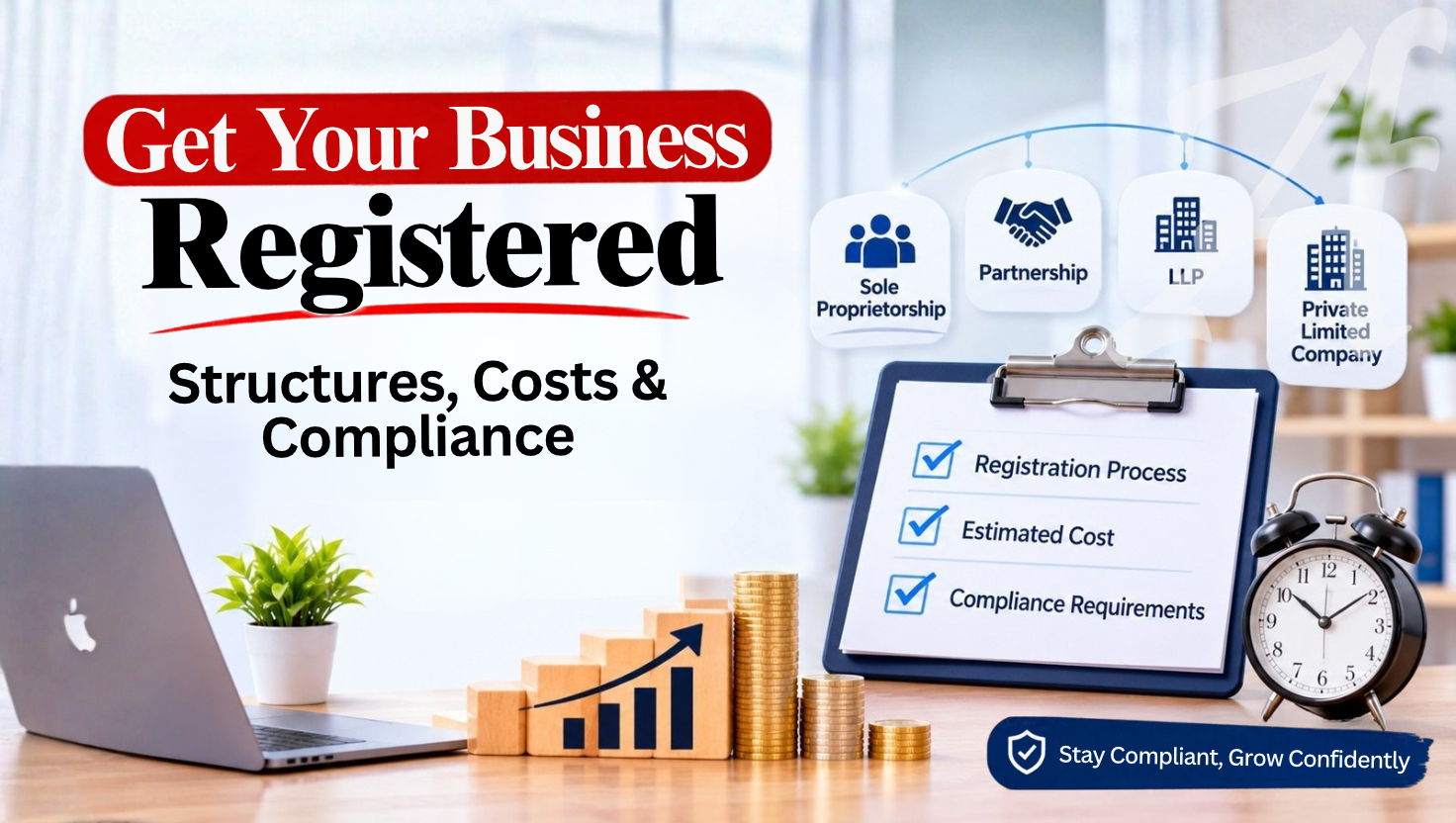
Quick answer: Registering a business in India takes three decisions: pick a structure (Private Limited, LLP, or OPC), get a complete cost quote covering government fees, stamp duty, and DSCs, and plan the compliance that follows (GST, trademark, FSSAI, ITR, ROC). Startup India is a recognition, not a structure.
Registration is rarely the hard part now. Founders get tripped up by structure, real cost, and realising too late that registration is only the first compliance step.
Step 1: Choose the Right Structure
Switching later means extra filings, so decide carefully.
Where Startup India fits: it is not a structure. It's a DPIIT recognition applied for after incorporation, generally open to Private Limited Companies, LLPs, and registered partnership firms, not sole proprietorships. Age and turnover limits have been revised, so check the Startup India portal.
Step 2: Understand What Registration Really Costs
A transparent quote covers professional fees, government fees (depending on authorised capital and structure), stamp duty (varies by state), DSCs, name approval, MOA and AOA drafting, and PAN and TAN.
Where "hidden" costs come from: quotes omitting government fees, stamp duty, or DSCs, charging extra for name rejections, excluding post-incorporation steps, or offering only a generic MOA and AOA.
Ask before you pay: Does the price include government fees, stamp duty, and DSCs? What happens if the name is rejected? Is the MOA and AOA tailored to my business? What's included after incorporation?
A complete quote beats a lower headline price. See how to choose a trusted partner for company registration.
Why "100% Online" Still Needs Preparation
Everything runs on the MCA portal, but it only checks that forms are complete and consistent. Whether your structure suits your plans, or your MOA reflects your activities, is still on you. See how online company registration actually works.
Step 3: Plan for the Compliance That Follows
Incorporation gives the business a legal identity, not everything it needs to operate. Our company compliance guide explains which service fits which need.
| Area | When It Applies |
| GST registration | Turnover crosses the threshold, or you sell inter-state or via e-commerce |
| Trademark | You have a brand worth protecting; a company name isn't brand protection |
| FSSAI | You prepare, store, sell, or deliver food |
| ITR and tax filings | Every year |
| ROC annual filings | Every year, for companies and LLPs. See ROC deadlines and forms |
| Legal documentation | As you take on clients, staff, and partners |
Most growing businesses need several of these, rarely all at once.
Frequently Asked Questions (FAQ)
Q1. Which structure is best for a new business?
A: Private Limited for funding plans, LLP for professionals wanting lighter compliance, OPC for solo founders.
Q2. Is Startup India a type of company?
A: No. It's a DPIIT recognition for eligible businesses after incorporation.
Q3. Can company registration really be done 100% online?
A: Yes, including name approval, DIN, signatures, and the electronic certificate.
Q4. What should a transparent registration quote include?
A: Professional fees, government fees, stamp duty, DSCs, name approval, MOA and AOA drafting, PAN and TAN, and any exclusions.
Q5. Why do registration costs sometimes rise midway?
A: Usually because the quote omitted government fees, DSCs, or stamp duty, or documents needed correcting.
Q6. What compliance is needed after registration?
A: Commonly GST, ROC filings, income tax returns, and where relevant trademark or FSSAI.
Register With the Whole Picture in View
Businesses that find compliance easiest planned for it from the start. For one team to support registration and compliance for businesses in Odisha and across India.