
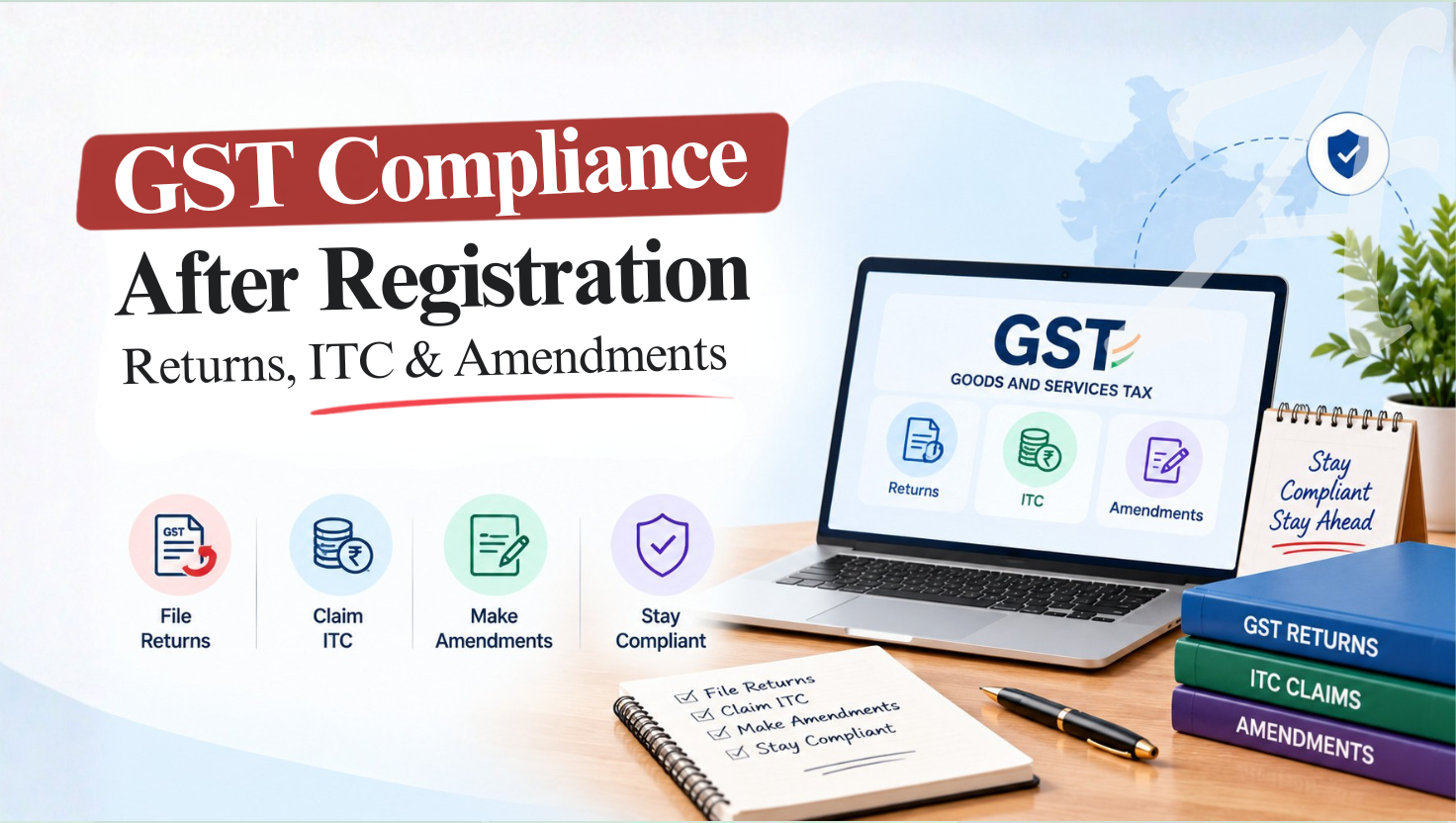
Quick answer: A GSTIN doesn't complete your GST obligations - it starts them. Once registered, you must file GSTR-1 and GSTR-3B on schedule (including nil returns), reconcile input tax credit against portal data, and amend business details whenever they change.
There's a common assumption among newly registered businesses: once the GSTIN arrives, GST is "done." In practice, registration is where GST obligations begin. If you're still at that stage, our guide to GST registration online in 2026 covers it - this article picks up from the day your GSTIN arrives.
What Actually Starts After Registration
A GSTIN makes your business liable to file returns, whether or not you had sales. Nil returns still need filing. The filing calendar starts immediately, and missing it triggers late fees regardless of turnover.
Returns Filing Is Recurring, Not Occasional
Most regular taxpayers file GSTR-1 (outward supplies) and GSTR-3B (summary return and tax payment) monthly or quarterly depending on turnover and scheme, plus an annual return where applicable. Each missed filing compounds the next. Keep the GST return due dates for 2026 visible, and if the process is unfamiliar, this step-by-step GST filing guide walks through it.
Late Filing Costs More Than the Fee
Late fees and interest are the visible cost. The hidden one: your buyers can't claim input tax credit on your invoices if you haven't filed GSTR-1 correctly. Your delay becomes their problem - the kind of thing that damages B2B relationships.
Prolonged non-filing is more serious, though not always fatal - GST registration is restorable even after a six-month default once pending returns are filed.
Amendments Businesses Forget About
Business details change - a new address, an added place of business, a change in authorized signatory. Each needs updating on the GST portal; not doing so creates mismatches during assessments or notices.
Input Tax Credit: Where Most Money Gets Lost
ITC is one of GST's biggest advantages and easiest to lose. Claims depend on suppliers filing correctly and your reconciliation being accurate. Businesses that don't reconcile purchase records against portal data often discover shortfalls only when a notice arrives - long after the correction window is easy to use.
Why Ongoing Advisory Beats One-Time Setup
GST isn't static. The scheme suiting you at ₹30 lakh turnover may not suit ₹2 crore. Composition scheme eligibility, e-invoicing thresholds, and reverse charge applicability all shift as you grow. Even the threshold question - whether GST registration is mandatory below ₹20 lakh - matters for proprietors weighing voluntary registration.
What Compliant Looks Like Month to Month
- File GSTR-1 and GSTR-3B on schedule, including nil returns
- Reconcile purchase records against portal data regularly
- Update business details on the portal as soon as they change
- Track ITC eligibility rather than assuming all input tax is claimable
- Watch for threshold changes affecting filing or invoicing
Frequently Asked Questions (FAQ)
Q1. Do I need to file GST returns if I had no sales?
A: Yes. Nil returns are mandatory, and not filing them attracts late fees.
Q2. What returns does a regular GST taxpayer file?
A: GSTR-1 for outward supplies and GSTR-3B for summary and tax payment, monthly or quarterly depending on turnover and scheme, plus an annual return where applicable.
Q3. What happens if I file GST returns late?
A: Late fees and interest apply, and your buyers may be unable to claim input tax credit on your invoices.
Q4. Can GST registration be cancelled for non-filing?
A: Prolonged default can lead to cancellation, though registration is restorable once pending returns are filed.
Q5. Why do businesses lose input tax credit?
A: Usually supplier non-compliance, or no regular reconciliation between purchase records and portal data.
Q6. Does my GST obligation change as my business grows?
A: Yes. Turnover thresholds affect filing frequency, composition scheme eligibility, and e-invoicing requirements.
Registration Is the Start, Not the Finish
A GSTIN lets your business operate under GST; staying compliant is what keeps it running - protecting your input tax credit, buyer relationships, and departmental record.
For end-to-end GST support, from registration to returns, amendments and advisory, Auditfiling can help at www.auditfiling.com.