
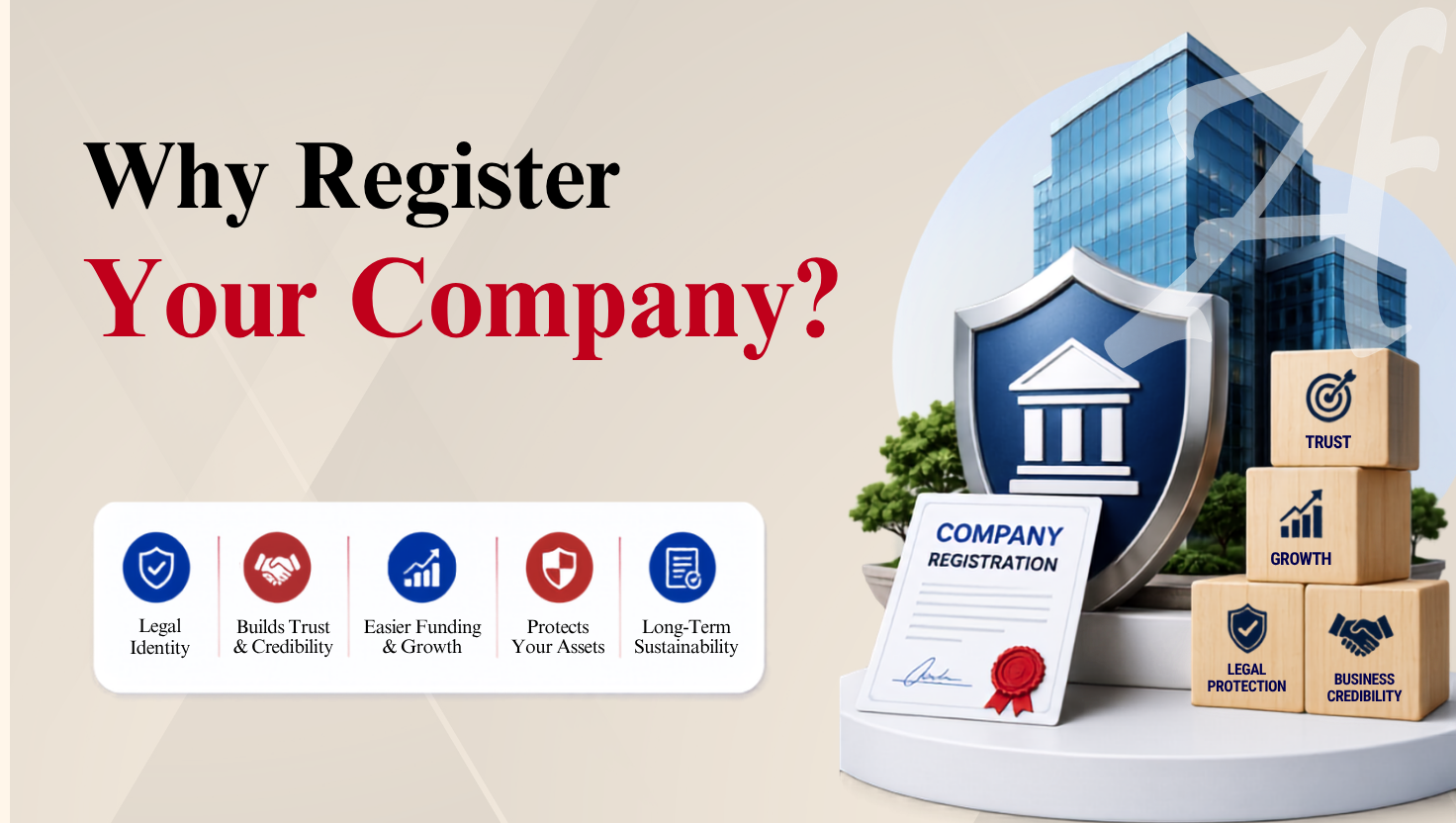
A lot of businesses in India start informally, a shop, a service, a small team, and run for months or years before registration even comes up. It's not always negligence; often it's just that the day-to-day of running a business crowds out the paperwork. But registration isn't only a legal checkbox. It changes what your business can actually do.
It Gives Your Business an Identity
An unregistered business is, legally, just an individual doing work. A registered company is a distinct legal entity with its own name, PAN, and standing, separate from the person who started it. That distinction matters more than it sounds: it's what lets a business sign contracts in its own name, own assets, and continue to exist even if ownership changes hands later.
It Builds Credibility You Can't Fake
Ask any founder who's tried to close a deal with a larger client or a cautious vendor: the first question is often "are you registered?" A registered company signals that a business has gone through formal compliance, which makes customers, partners, and vendors more willing to trust it with contracts, advance payments, or long-term commitments. It's a trust shortcut that unregistered businesses simply don't have access to.
It Opens Doors at the Bank
Business banking is one of the more underrated reasons to register. A current account in the company's name, working capital loans, business credit lines, most of these require proof of registration before a bank will even discuss terms. Businesses running everything through a personal account often hit this wall the first time they need to borrow or scale, and by then, registration becomes urgent instead of planned.
It Creates Room to Grow
Growth usually means more than working harder, it means raising funds, hiring formally, or expanding into new markets. Investors don't invest in individuals; they invest in registered entities with clear ownership structures. Formal hiring requires PF/ESI compliance tied to a registered business. Even expanding to another state often requires the credibility and documentation that only a registered company can provide. Without registration, growth has a ceiling; with it, the ceiling moves.
What Waiting Costs
None of this is urgent until it suddenly is, a client asks for a registration certificate, a bank declines a loan application, an investor asks about entity structure. Registering early means these moments are non-events instead of scrambles. It's far easier to register a company before you need to prove it exists than to rush through registration while a deal is on the line.
Frequently Asked Questions (FAQ)
Q1. Do I really need to register a small or early-stage business?
A: It depends on your plans, but even small businesses benefit from the credibility and banking access registration provides, especially once you start working with other businesses.
Q2. Can I open a business bank account without registration?
A: Most banks require proof of registration for a dedicated business current account, which is often a business's first real need for it.
Q3. Does registration actually help with getting clients?
A: Yes, many businesses and government tenders require proof of registration before they'll even consider a vendor.
Q4. What's the risk of staying unregistered too long?
A: You may face bank account limitations, difficulty raising funds, and lost deals with clients who require registered vendors, often at the exact moment you need those things most.
Q5. Does registration help if I want to raise funding later?
A: Yes, investors invest in registered legal entities with clear ownership, not in informal or unregistered businesses.
Build the Foundation Before You Need It
Registering a company isn't just about compliance, it's what gives a business an identity, credibility, banking access, and the ability to grow past its current size. The businesses that register early rarely regret it; the ones that wait usually wish they hadn't.
If you're ready to register your company, Auditfiling can guide you through the process.