
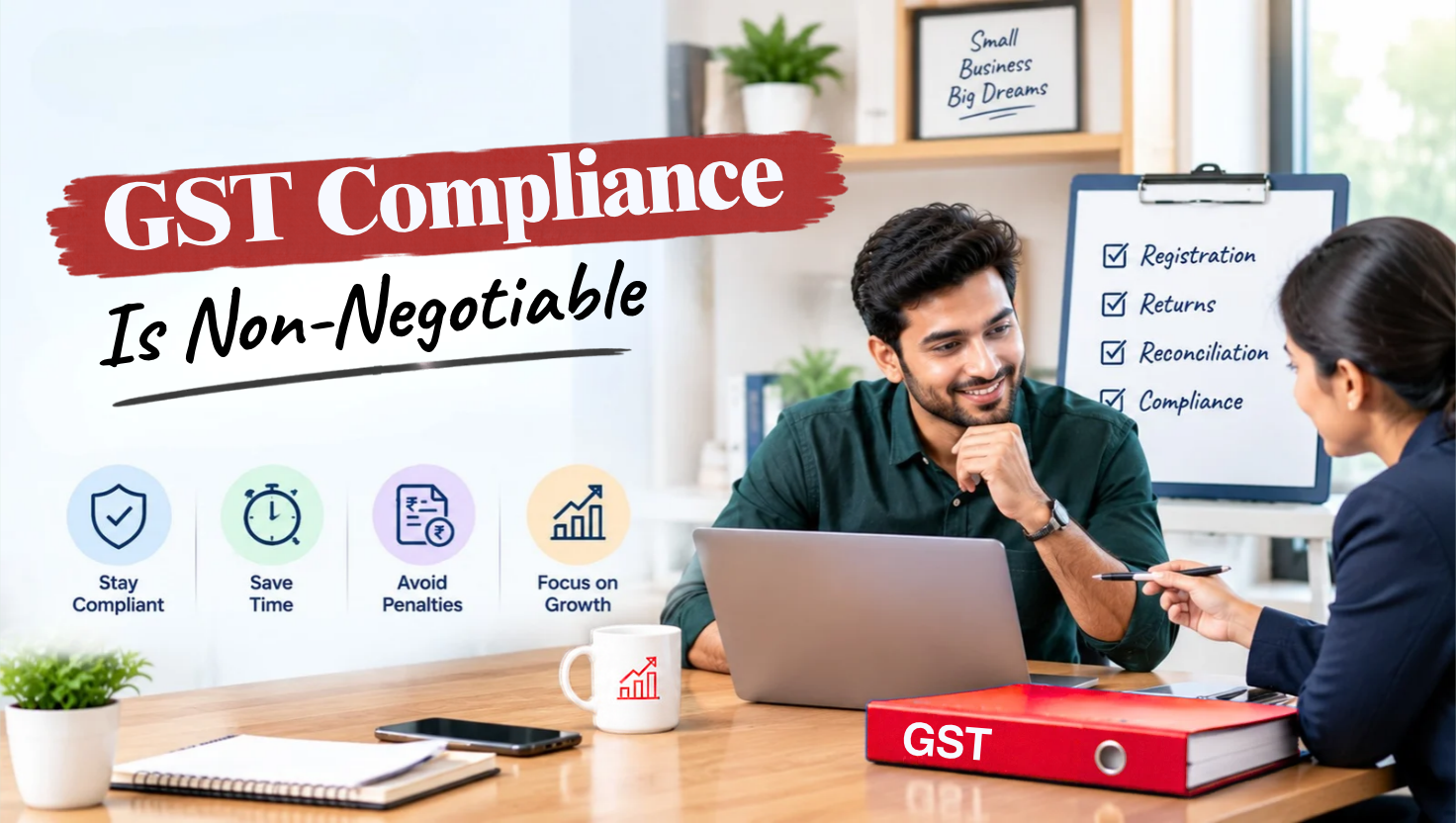
Quick answer: GST isn't a choice once your business crosses the registration threshold or falls into a mandatory category. Good compliance comes down to two things: accurate data and on-time filing. Founders bring in experts to protect both as mistakes compound.
Founders make a lot of choices: product, pricing, hiring, funding. GST isn't one of them. Whether you need registration below ₹20 lakh turnover or are above the threshold, once it applies it runs as long as the business does.
GST Is a Compliance, Not a Preference
Many early-stage founders treat GST as a task for "when there's time." But GST has fixed due dates and formats, and consequences accrue automatically. The portal doesn't wait for a quiet week.
When You're Growing, Mistakes Get Expensive
One GST error is rarely dramatic, but errors compound as you scale:
- Wrong tax rate or classification, meaning under-collected tax you'll later owe, or over-charged customers
- Mismatched input tax credit, where purchase records don't match what suppliers reported
- Incorrect GSTR-1 data, which affects buyers' credit and strains relationships
- Late or missed returns, attracting late fees and interest
From Registration to Monthly Filings
GST compliance is a sequence, and each stage depends on the one before it:
- Registration: correct business details and timely extras like bank account information. Our 3 post-registration GST rules cover what new registrants miss.
- Ongoing returns: GSTR-1 and GSTR-3B, monthly or quarterly depending on turnover and scheme
- Reconciliation: matching books against portal data so input tax credit is claimed correctly
- Amendments: keeping the portal current as business details change
- Annual filings: where applicable
For the full picture, read GST Registered? Don't Stop at GSTIN.
The Two Things That Matter: Accuracy and Timing
Accurate: your filings match your actual activity and records, so you can stand behind them if a buyer, supplier, or the department asks.
On time: a late return can mean late fees, interest, and a buyer who can't claim credit on your invoice. Each missed filing can make the next more complicated, so keep the GST return due dates for 2026 in front of you.
Why Founders Bring in Experts
- Time: hours reconciling invoices aren't spent on product or customers
- Accuracy: regular filers spot classification and credit issues earlier
- Continuity: due dates and rule changes tracked as routine
- Peace of mind: fewer unknowns when a notice arrives
Signs It May Be Time to Get Help
- You've missed a GST due date, or come close more than once. Note that registration can be restored even after a six-month default once returns are filed.
- Your input tax credit doesn't match expectations
- You're unsure which return or scheme applies
- You've received a notice and aren't sure how to respond
Frequently Asked Questions (FAQ)
Q1. Is GST registration optional for a new business?
A: It depends on turnover, the kind of supply, and where you operate. Once you cross the applicable threshold, or fall under a mandatory category, it becomes compulsory.
Q2. What are the most common GST mistakes new businesses make?
A: Incorrect rates or classification, mismatched input tax credit, wrong return data, and late filings.
Q3. What happens if I file GST returns late?
A: Late fees apply per day, interest is charged on tax paid late, and your buyers may be unable to claim input tax credit.
Q4. Do I need to file a GST return if I had no sales?
A: Yes. Nil returns are still required, and missing them attracts late fees.
Q5. Can I handle GST compliance myself?
A: Yes, many founders do at very small scale. As volumes grow, many bring in expert help.
Q6. What does GST compliance cover after registration?
A: Return filing, input tax credit reconciliation, registration amendments, and annual filings where applicable.
Don't Put Your Business at Risk
Founders who handle GST well get it right and get it done on time. For expert support with GST registration and monthly filings in Odisha, explore Auditfiling's GST services.